






2026 Jeep Grand Cherokee vs Ford Explorer: Side-by-Side Comparison
Shopping for your next family SUV in Bradenton? The decision between these two midsize options boils down to what matters most in your day-to-day life. The 2026 Jeep Grand Cherokee vs 2026 Ford Explorer matchup presents a clear choice: rugged capability with upscale touches, or maximum seating with practical design. At Firkins CDJR, we help families navigate this comparison daily, and we invite you to explore our Grand Cherokee selection to see these differences firsthand.
The Grand Cherokee excels at towing and off-road confidence while maintaining a premium feel. The Explorer prioritizes interior space with its standard three-row setup. Both deliver modern features and solid performance, but they target different family needs.
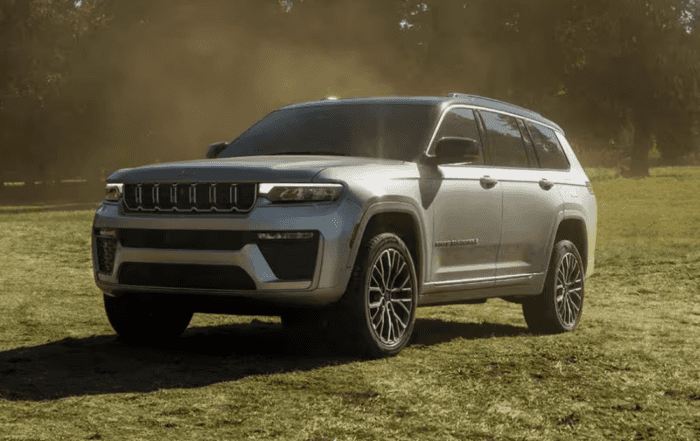
2026 Jeep Grand Cherokee vs Ford Explorer: Key Differences at a Glance
When you compare these SUVs side by side, their personalities become clear quickly. Here are the essential specs that matter:
| Feature | 2026 Jeep Grand Cherokee | 2026 Ford Explorer |
| Seating Rows | 2 rows standard (3 rows on Grand Cherokee L) | 3 rows standard |
| Base Engine | 3.6L V6, 293 hp, 260 lb-ft (Laredo/Laredo X); 2.0L Hurricane 4 Turbo, 324 hp, 332 lb-ft (Laredo Altitude and above) | 2.3L EcoBoost I-4 Turbo, 300 hp, 310 lb-ft |
| Max Horsepower | 375 hp (2.0L I4 Turbo 4xe PHEV) | 400 hp (3.0L EcoBoost V6 – ST trim) |
| Max Towing | 6,200 lbs | 5,000 lbs |
| Fuel Economy (City/Hwy/Comb) | 19/26/22 MPG | 20/29/24 MPG |
| Drivetrain | RWD std (Quadra-Trac 4×4 avail) | RWD std (Intelligent 4WD avail) |
| Ground Clearance | 8.4 in | 8.2 in |
| Fuel Capacity | 23 gal | 17.9 gal |
The Grand Cherokee brings serious off-road credentials and tows up to 6,200 pounds, making hauling boats or campers genuinely manageable. The Explorer counters with room for seven passengers, though that back row works best for kids rather than full-sized adults.
Step inside either vehicle and you’ll notice the material differences right away. Grand Cherokee cabins feel distinctly more upscale, especially in higher trims where soft-touch surfaces and refined details create an almost luxury atmosphere. Ford focuses on practicality and space, delivering plenty of room without quite matching the premium experience. Technology-wise, both pack modern infotainment systems, but the Grand Cherokee’s Uconnect interface edges ahead with more intuitive controls and standard wireless smartphone integration.
Performance and Capability Comparison
Engine Power and Towing Capacity
These SUVs approach power delivery from different angles. The Grand Cherokee’s entry Laredo trims carry the proven 3.6L Pentastar V6 paired with an 8-speed automatic, producing 293 horsepower and 260 lb-ft of torque. Laredo Altitude and above receive the all-new 2.0L Hurricane 4 Turbo producing 324 horsepower and 332 lb-ft of torque, paired with a new Gen IV 8-speed automatic. The Explorer’s base 2.3L EcoBoost I-4 turbo connects to a 10-speed automatic, delivering 300 horsepower and 310 lb-ft of torque. The real difference shows up when you hook up a trailer.
The Grand Cherokee’s 6,200-pound towing capacity significantly outpaces the Explorer’s 5,000-pound limit. If you regularly haul boats to Anna Maria Island or tow camping trailers to Myakka River State Park, that extra 1,200 pounds of capacity makes a real difference. The Jeep’s robust construction and available air suspension help maintain stability when pulling near maximum weight.
Off-Road and All-Weather Performance
Jeep’s trail reputation runs deep, and the Grand Cherokee lives up to that legacy. Available Quadra-Trac I and Quadra-Trac II 4×4 systems include terrain modes that automatically adjust throttle response and traction settings for sand, mud, snow, or rocks. The Quadra-Trac II system features low-range gearing and an electronic locking rear differential for serious off-road work. Ground clearance of 8.4 inches beats the Explorer’s 8.2 inches, letting you navigate rutted forest roads or flooded parking areas without scraping.
The Explorer handles paved roads beautifully and manages light dirt paths adequately with its Intelligent 4WD system, but serious off-roading isn’t what Ford designed it for. When Florida’s summer storms roll through and standing water covers low-lying roads, the Grand Cherokee’s higher stance and advanced 4×4 systems provide more confidence. This capability difference matters for Bradenton families accessing beach areas via sandy roads or exploring nearby camping spots on unpaved trails.
Interior Space and Comfort
Passenger Room and Seating Quality
Both SUVs offer spacious cabins, but their execution differs significantly. The Grand Cherokee’s standard two-row layout provides exceptional comfort for five adults, with generous legroom and supportive seats that handle long drives without fatigue. Higher trims feature genuine leather, adjustable lumbar support, and heating plus ventilation that makes Florida summers tolerable.
The Explorer’s three-row configuration seats seven total, though that third row works best for children or shorter adults. Legroom gets tight back there quickly, and climbing over the second row to reach those seats isn’t particularly graceful. The Grand Cherokee L variant adds a third row withsecond-row legroom exceeding 39 inches compared to the Explorer’s 37 – 39 inches depending on trim, maintaining better overall comfort. Jeep designed usable space rather than treating the third row as an occasional-use compromise.
Material quality throughout the Grand Cherokee cabin feels more upscale. Dashboard surfaces use soft-touch materials instead of hard plastics, controls operate with satisfying precision, and fit and finish suggests a vehicle priced above its segment. The Explorer maintains good build quality but can’t quite match that premium atmosphere, particularly in base trims.
Cargo Versatility
Hauling gear for beach days, youth sports, or weekend adventures requires serious cargo space. The Grand Cherokee delivers more room behind its rear seats compared to the Explorer, even in two-row configurations. That advantage grows when the Explorer’s third row stays upright, which severely limits cargo volume.
Both SUVs offer split-folding rear seats that expand cargo capacity. The Grand Cherokee’s slightly squarer cargo area makes loading larger items more straightforward, while thoughtful touches like cargo management systems and power liftgates simplify the process. If you constantly haul equipment while also carrying kids, the Explorer’s extra row makes sense despite tighter cargo space. Families who prioritize gear-hauling over maximum passenger count will find the Grand Cherokee’s combination of space and flexibility more practical daily.
Technology and Infotainment Features
Modern SUVs function as mobile entertainment hubs, and both deliver well-equipped systems. The Grand Cherokee pulls ahead with its Uconnect interface, praised for intuitive operation and quick response times. Large touchscreens come standard across most trims, and the menu structure makes sense even for drivers who aren’t particularly tech-savvy. Wireless Apple CarPlay and Android Auto integration connects your smartphone automatically, eliminating cable fumbling. Available upgrades include a McIntosh premium audio system and a front passenger display for enhanced entertainment.
Ford equips the Explorer with its SYNC system, which works competently but doesn’t quite match Uconnect’s polish. The available 13.2-inch touchscreen and B&O Sound System with up to 14 speakers deliver competitive features, but menu navigation sometimes requires extra steps. Both systems support voice commands, navigation, and smartphone integration for commutes to Tampa or exploring back roads through Manatee County.
We encourage you to browse our Jeep vehicles and experience the Grand Cherokee’s technology advantages during a test drive at our Bradenton location.
Safety Features and Driver Assistance Systems
Both manufacturers prioritize occupant protection. The Grand Cherokee includes more standard driver assistance features across its trim lineup, so you don’t need premium packages for essential safety systems. Automatic emergency braking, blind-spot monitoring, and rear cross-traffic alert come standard in most configurations.
The Explorer offers similar safety technologies but often bundles them into option packages rather than making them standard. Both SUVs earn strong crash-test ratings from IIHS and NHTSA, so structural safety remains excellent regardless of your choice. Advanced systems like adaptive cruise control, lane-keeping assistance, and parking sensors make highway drives less fatiguing. The Grand Cherokee’s systems generally operate more smoothly, with less intrusive interventions that make them easier to live with daily.
Fuel Economy and Ownership Value
Efficiency numbers matter for covering miles throughout the region. The Explorer posts competitive MPG ratings of 20/29/24 city/highway/combined that work well for family transportation. The Grand Cherokee’s conventional powertrains deliver 19/26/22 MPG with the base Pentastar V6, matching up reasonably well.
Where the Grand Cherokee truly shines is with its available plug-in hybrid option, which dramatically reduces fuel costs if your daily driving stays within electric range. Running errands around Bradenton on battery power alone means zero gas consumption, while the hybrid system ensures you’re never stranded. This flexibility doesn’t exist in the Explorer lineup.
The Grand Cherokee also features a larger 23-gallon fuel tank compared to the Explorer’s 17.9 gallons (base 2.3L engine), translating to an estimated combined range of approximately 529 miles versus 430 miles. When heading to Orlando theme parks or making the drive to Miami, that extra range eliminates stops and keeps you moving. We offer flexible financing options to help make ownership of your chosen SUV more accessible.
Which SUV Fits Your Lifestyle?
The Grand Cherokee vs Explorer debate comes down to how you use your SUV. Here’s what each excels at:
| Lifestyle Fit | 2026 Jeep Grand Cherokee Strengths | 2026 Ford Explorer Strengths |
| Family Hauling | Premium 2-row comfort (3-row L avail), versatile cargo | Standard 3 rows, max seating |
| Towing/Adventures | 6,200 lbs capacity, true 4×4 systems | Strong acceleration, 400 hp max |
| Daily Bradenton Drives | Refinement, longer range, off-road readiness | Better MPG, spacious utility |
Families needing genuine off-road capability, superior towing strength, and a more upscale cabin experience will find the Grand Cherokee better matches their requirements. Its combination of rugged capability and refined daily comfort makes it exceptionally versatile for Bradenton-area families who want one vehicle that truly handles everything.
The Explorer makes more sense if maximum passenger capacity tops your priority list and off-road adventures rarely factor into your plans. Its three-row layout accommodates larger families, though you’ll sacrifice some cargo space and overall refinement compared to what the Grand Cherokee delivers.
Experience the Grand Cherokee at Firkins CDJR
At Firkins CDJR, located at 2700 1st St in Bradenton, we help families navigate real-world comparisons that matter for your specific situation. We encourage test drives that explore both highway comfort and the capability that makes the Grand Cherokee special. Our sales team works Monday through Friday from 8 AM to 8 PM, Saturdays from 8 AM to 6 PM, and Sundays from 11 AM to 4 PM, giving you flexibility to visit when it fits your schedule.
Beyond the initial purchase, our service center staffed by factory-trained technicians keeps your Grand Cherokee running perfectly for years to come. Genuine OEM parts, advanced diagnostic equipment, and convenient service hours from 7 AM to 5:30 PM Monday through Friday ensure your SUV receives expert care close to home. Whether you’re curious about long-term reliability or simply want to experience what makes the Grand Cherokee special, contact our team or call our sales team at 941-301-2547 to discover how the Grand Cherokee fits your family’s lifestyle perfectly.
0 comment(s) so far on 2026 Jeep Grand Cherokee vs Ford Explorer: Side-by-Side Comparison